
Caliche & Gravel Driveway Installation
New drives, rebuilds, ranch entrances, and oilfield lease roads across Gaines County and the Permian Basin. Built on a compacted base with a crown, so the water runs off the drive instead of sitting in your tracks.
Tell us where the drive runs and what drives on it. We'll tell you what it takes to build one that stays.
Or send the details and we'll call you back
Monday to Friday, 7:00 AM to 6:00 PM.
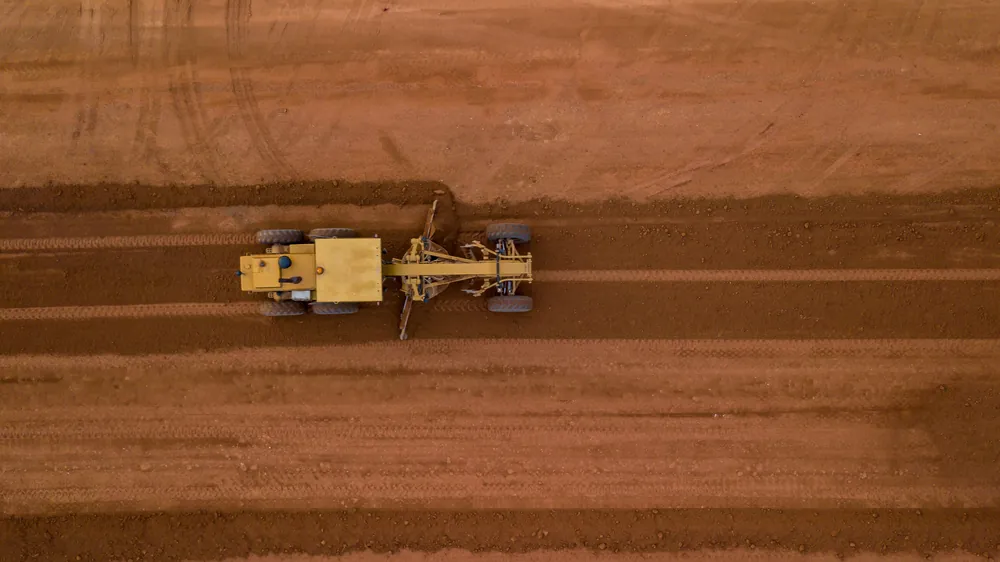
Frank Redekopp Builds These
Level Ground Construction is Frank Redekopp's outfit, run out of Seminole. Around Gaines County the name usually does the introducing. Call and say where the drive runs — off a county road, down a section line, out to a tank battery, or up to a house that isn't built yet — and you'll get a straight answer about what that ground will take and what the job involves.
New Driveways and Rebuilds for Homes and Ranches
We build new drives and rebuild worn-out ones: house drives, shop approaches, ranch entrances, and the long run from the gate to wherever you actually park. New or rebuilt, it comes down to the same three questions. What's underneath. How thick the surface has to be. And where the water goes.
On a new drive, most of the work happens below the surface. The route gets cleared and grubbed, topsoil and any soft or organic dirt is stripped off, and the subgrade underneath is shaped and compacted before a single load of surface material is spread. Building on top of loose dirt is the most common reason a drive that looked good in June has ruts in it by Christmas.
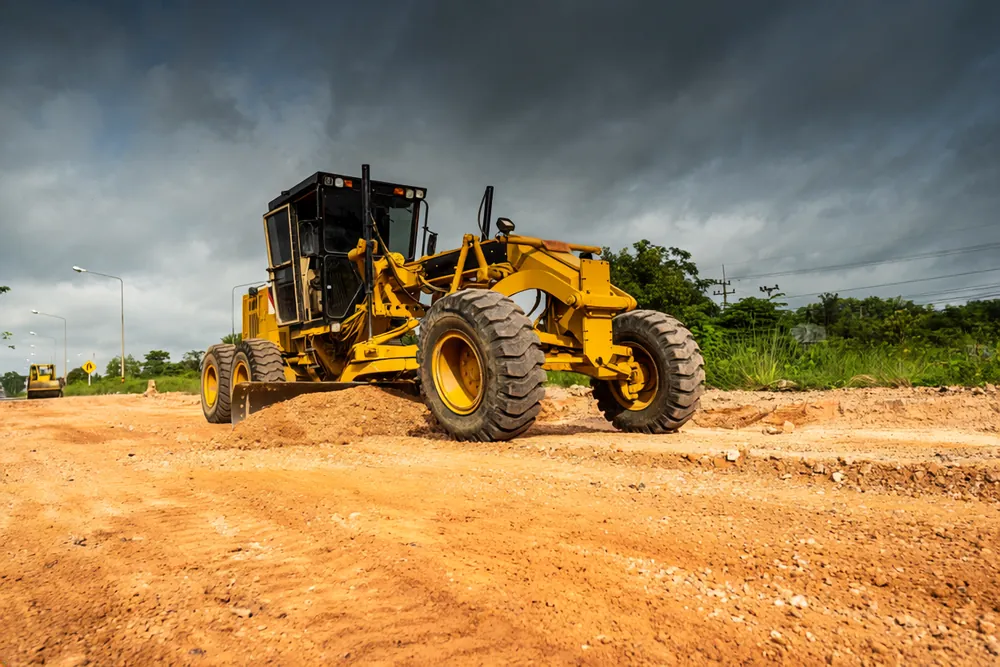
A rebuild is a different conversation. Sometimes the base underneath is still sound and the drive needs the ruts cut out, fresh material added, and the crown put back with a blade. Sometimes the base is gone — water has been sitting in it for years — and adding material on top just buries the problem deeper. Which one you have is something somebody has to look at. You can't tell from the top.
Drive washing out every spring? Call Frank at (432) 209-5410.
Caliche or Gravel — What Each One Is Good At
These two behave nothing alike, and the whole difference is whether the material binds together or stays loose.
Caliche is the pale, chalky material sitting under a lot of West Texas — calcium carbonate that has cemented the sand and gravel below the topsoil into a hardpan. Spread damp and compacted, it packs into a tight, hard surface that sheds water and drives like a road. It's the default here because it's local material and because nothing else binds the way it does. Its weakness is water in the wrong amount: soaked, the top of it goes slick and greasy; placed dry, it never binds at all and stays loose enough to blow and scatter.
Gravel — crushed or screened rock — doesn't bind. Every stone stays its own stone. That makes it drain well, stay firm in the wet, and never go slick the way caliche can. The trade is that loose rock travels: it scatters into the yard, gets thrown by tires, and plows out to the sides unless it has a shoulder or an edge to live against. It also comes from farther off, because caliche is local material and crushed rock generally isn't, so haul distance shows up in the number.
Most drives out here end up caliche, with rock used where it earns its keep — a stretch that stays wet, an approach that has to stay firm through a rain, or a place where slick would be a real problem, like a slope down to a gate. Plenty of drives get both: a compacted caliche base with rock over the section that needs it. Tell us where the drive sits and what it does in a hard rain, and we'll tell you which one we'd put down.
Base Depth and Crown Decide How Long It Lasts
A driveway is a structure, even when it's made of dirt and rock. It carries weight down through the surface into the ground underneath, and it fails from the bottom up, not the top down.
Base depth is how thick the compacted section is. Thin material over soft ground doesn't stay a surface — traffic works it down into the dirt until there's a rut where the drive used to be. How thick yours needs to be depends on what the subgrade is, how heavy the traffic is, and how often it comes. A drive that sees a pickup twice a day and a drive that sees a loaded water truck are not the same drive. Material also goes down in lifts and gets compacted as it goes, because a compactor only reaches so far. Spread thick and rolled once, it's tight on top and loose underneath — and the loose part is the part that matters.
Crown is the part that gets left out, and out here it's the part that decides everything. A crown is a slight rise down the middle of the drive, so the center sits a little higher than the edges. Water landing on it runs sideways and off into the borrow instead of standing in the wheel tracks. Standing water is what kills a caliche drive: it soaks into the base, softens it, and then traffic pumps the fines up and out through the surface. That's a pothole, from the beginning. A flat drive holds water. A crowned drive sheds it. That's the whole difference, and it's why a drive gets bladed back to a crown from time to time rather than just topped with more material.
The edges matter as much as the middle. If the ground beside the drive is higher than the drive, or a berm of grass and blown sand has built up along the sides over the years, the crown has nowhere to shed to and the drive turns into a ditch. Where a drive crosses low ground or a draw, the water needs a way under it instead of across it — which is the next section.
Not sure whether your base is gone or it just needs blading? Call (432) 209-5410.
Culverts and Cattle Guards Where the Drive Meets the Road
Where a private drive comes off a county road, two things usually have to be settled before anything else gets built: what happens to the water in the borrow ditch, and what happens at the fence line.
The ditch alongside a county road is carrying water, and a drive laid straight across it is a dam. A culvert — pipe set in the crossing with compacted material built up over it — lets that water keep moving under your entrance instead of backing up behind it or cutting the end of the drive off. The pipe has to be sized for the water it will actually see, set at the right depth and fall, and covered deep enough that traffic doesn't crush it. A culvert that's undersized, too shallow, or laid dead flat is worse than none: it silts up, and then it's a dam with a pipe in it.
A cattle guard does at the fence line what a gate does, without anybody getting out of the truck. It needs a proper excavation, something solid for the beams to bear on so it doesn't settle under load, and drainage under the pit so it doesn't fill with dirt and water and quietly stop working. A cattle guard sitting in a silted-in pit isn't a barrier. It's a rough spot in a fence.
One thing worth raising on the first call: what happens where you meet the county road is generally the county's business as well as yours. Where a new approach may go, what the culvert has to be, and who looks at it before it's covered are decided locally, and they aren't the same in every county we work in. Better to sort that out before the base goes down than after.
Ranch and Oilfield Lease Access Roads
This section is for operators, ranch managers, and anybody who has to get equipment somewhere on a date. A lease road is a driveway with a much harder job: it has to stay passable for heavy iron, in weather, on a schedule that isn't yours.
What the road needs comes from the traffic, not the length. A road a pumper drives daily in a pickup is built differently from one that has to take a rig move, a loaded vac truck, or a crane. Width and turning radius have to fit the longest thing that will use it — a road a truck can drive but can't turn around on gets torn up at both ends by every driver who has to back out of it.
- What drives on it, and how heavy. The heaviest single load sets the section. The average doesn't.
- How often, and for how long. A road for a two-week job and a road that will still be there in ten years are built differently on purpose.
- Where it ties in. County road, state highway, or an existing lease road — the tie-in is usually the part with rules attached to it.
- What it crosses. Draws and low ground need culverts. Fence lines need a gate or a cattle guard. Buried lines need locating before anything digs.
- Whether it has to be all-weather. That's a decision with a cost attached, and it's better made deliberately than discovered in a wet spring.
Maintenance belongs in the plan, not after it. A caliche lease road bladed back to crown before the ruts get deep stays a road for years. One left until the potholes are holding water needs rebuilding instead of blading, and rebuilding is the bigger number by a distance.
Building a location or laying out a lease road in Gaines County or the counties around it? Call (432) 209-5410.
What Actually Destroys a Driveway in West Texas
None of this is dramatic. Drives fail slowly, for ordinary reasons, and nearly every reason traces back to a decision made when it was built:
- Standing water. Rain here tends to arrive all at once. A flat drive holds it in the wheel tracks, it soaks into the base, and traffic pumps the fines out through the surface. That's how a pothole starts.
- No crown, or a crown that's been bladed off. The same failure, and the one that keeps coming back — a crown is something you maintain, not something you install once.
- A blocked shoulder. Grass, blown sand, and years of edge trimmings build a berm along the sides that keeps water sitting on the drive.
- Not enough section. Too little material over soft ground disappears into it. The drive doesn't wear out. It sinks.
- Caliche placed dry. Caliche needs moisture to compact and bind. Dry material never locks up — it stays loose, blows, and scatters instead of becoming a surface.
- Lifts too deep, or compaction skipped. Tight on top, loose underneath, and the loose part is where it fails.
- Loads it was never built for. A drive built for pickups won't survive a concrete truck or a house-moving trailer. If that's coming, it needs saying before the drive is built, not after.
- No blading, ever. A caliche drive has more in common with a piece of equipment than with a slab. Touched up occasionally, it lasts a long time. Left completely alone, it dies of it.
Almost none of that costs much to get right the first time. All of it costs to fix once the base is soaked and the ruts are down past the material.
Driving On It vs. Parking On It
Caliche turns up in two different jobs and they're built differently, so we keep them on two pages. This page is about surfaces you drive on — driveways, entrances, ranch roads, lease roads. Long, narrow, crowned, built to carry moving traffic and throw water off the sides.
Surfaces you park on are the other page. House pads, shop pads, building pads, equipment yards, and laydown yards are wide and flat, built to hold weight standing still and graded to drain toward an edge somebody picked on purpose. Different depth, different shape, different job. If what you need is somewhere to set a building or park iron, start there instead.
- Caliche pads and building pads — pads for houses, shops, buildings, and equipment yards
- Dirt work and excavation — clearing, grading, hauling, and the digging that comes before any of it
- Septic system installation in Seminole, TX — if the build needs a system as well as a drive
- Where Level Ground Construction works — the eleven towns we cover
Talk to Frank About Your Driveway
Tell us the town, roughly how long the drive is, what's on the ground now, and what drives on it. That's enough to have a real conversation. If it turns out you need a blade run over it and not a rebuild, we'd rather say so on the phone.
Can't talk right now? Send the details instead
Monday to Friday, 7:00 AM to 6:00 PM · sales@lgctexas.com
We build driveways, ranch entrances, and lease roads in Seminole, Seagraves, Loop, Denver City, Andrews, Lamesa, Brownfield, Midland, and Odessa, and across the state line in Hobbs and Lovington, New Mexico. See everywhere we work →